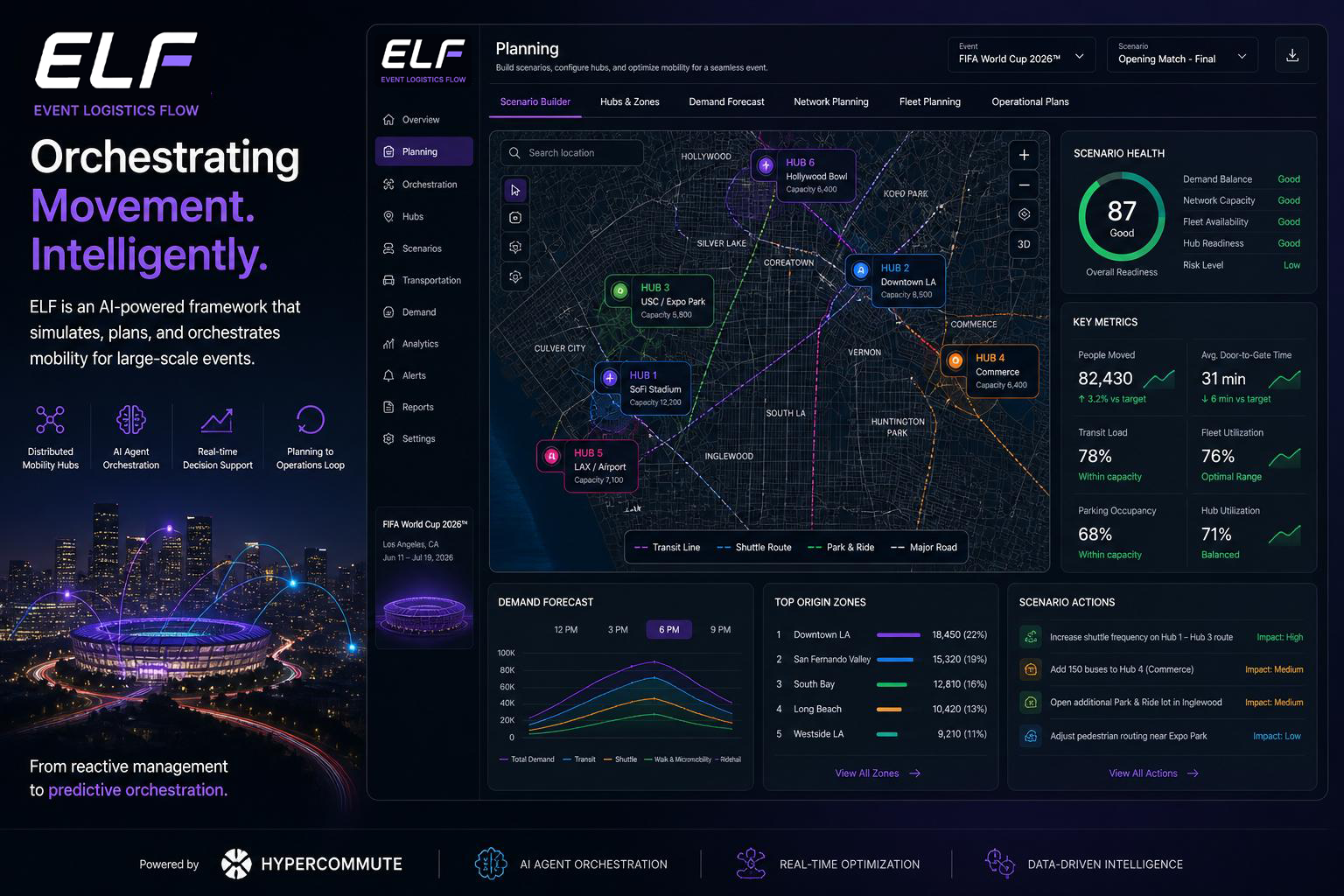
ELF helps cities simulate, coordinate, and optimize transportation for major events using distributed hubs, AI agents, and HyperCommute-powered orchestration.
Mega-events expose the fragmentation in urban transportation. Agencies plan independently, tools remain static, and live operations become reactive when demand shifts.
A planning and operations layer for cities, venues, transit agencies, and mobility partners.
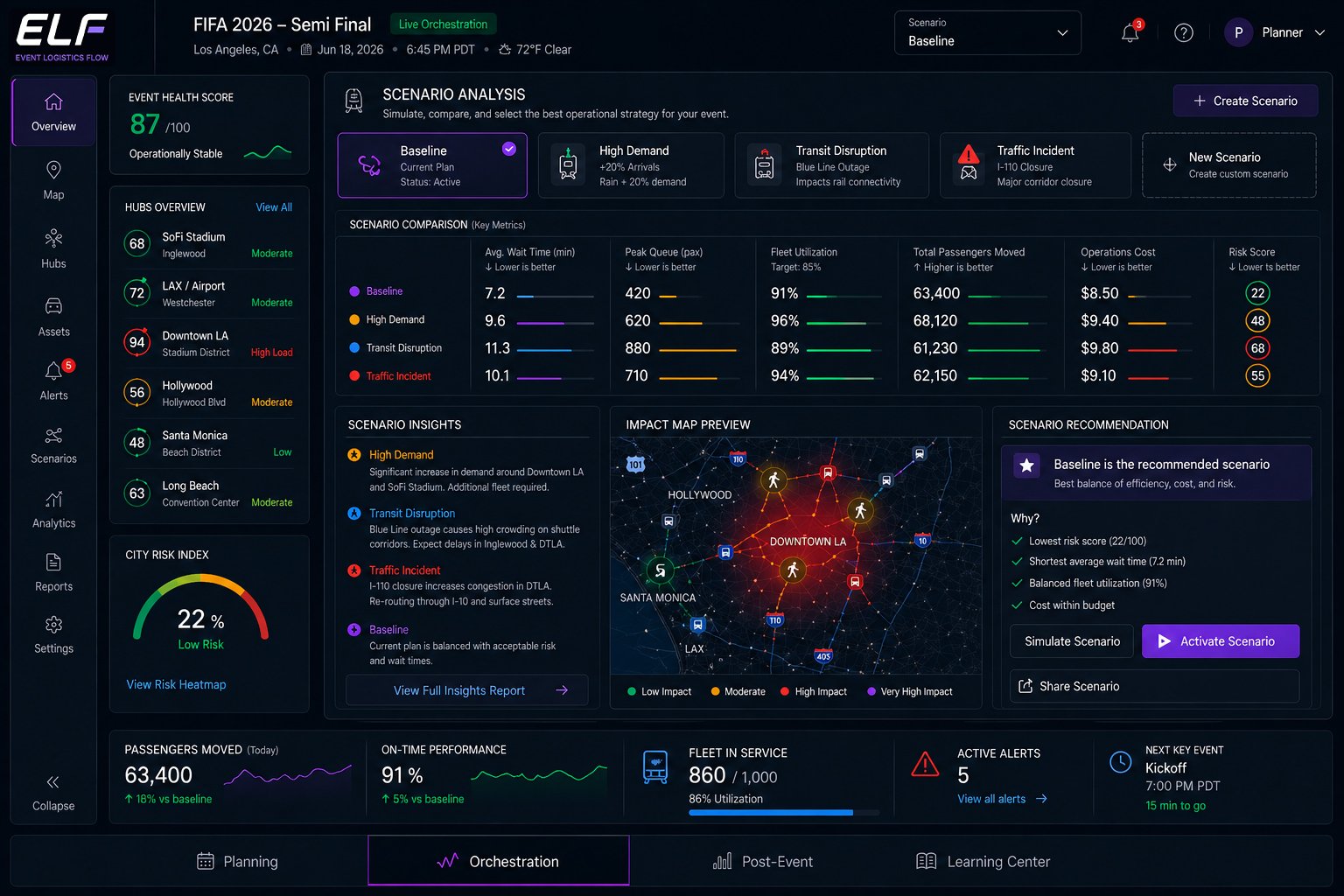
Ask natural-language questions, generate mobility plans, inspect risks, and approve recommended actions.
Model the city as configurable neighborhoods: stadium districts, fan zones, transit corridors, airports, and hotel clusters.
Coordinate fleet rebalancing, routing, hub load redistribution, and cross-agency interventions in real time.
ELF unifies the planning phase and orchestration phase into one continuous intelligence loop.
Stress-test high demand, rain, transit disruptions, traffic incidents, and venue egress before event day.
Coordinate neighborhood agents, hubs, and mobility assets through a shared citywide command layer.
Use live KPIs, AI alerts, and post-event learning to continuously improve future operations.
HyperCommute provides the mobility optimization engine. AutoGen enables specialized agents to collaborate around planning, risk, routing, fleet, equity, and live operations.
Monitor readiness, launch scenarios, interact with hub-level agents, and approve actions through a dark, map-first interface.
Coordinate stadium districts, fan zones, transit corridors, and security constraints at mega-event scale.
Optimize ingress, egress, parking hubs, shuttle flows, and pedestrian corridors.
Create a reusable operating framework for emergency response, festivals, parades, and daily mobility stress events.
ELF brings together AI agents, HyperCommute optimization, and city-scale orchestration to move people smarter during the world’s most demanding events.
Book Strategy Session